
Children should be taught to be responsible by doing chores and this does not need to be a tug-of-war. Chores enable the child to develop confidence, independence and feel contributing to the family when introduced positively and at an age-appropriate manner. Easy chores make kids realize that their activities are important and that every person has a role at home. The aim is not perfection but life skills that can be acquired and responsibility is built up with time. It is a big difference when there is consistency, encouragement and clear expectation. These simple tactics allow parents to make their daily tasks meaningful and instill competent, responsible children and at the same time making the home run in a smoother manner.
Begin With Age-Relevant Activities

Select the tasks according to the capabilities of your child. Young children can pack toys, whereas other children can assist with the laundry or dishes. Motivated tasks do not frustrate and gain confidence. Children are more ready to play and feel proud of what they present when they feel able to do it.
Create a Routine

Give out tasks at the same time throughout the day/week. Foreseeable patterns render duties as routine as opposed to being discretionary. Consistency makes the kids stick to the expectations and minimize resistance. With time duties become normal rather than an issue.
Teach Before Expecting

Demonstrate to children the way to do things. The unambiguous teaching eliminates errors and develops skills. Children are more self confident when they have knowledge on what to do and how to do it well.
Use Positive Encouragement

Things are not only being done, but are being done. Children are motivated by simple praise such as the one you give like You worked hard cleaning your room. Positive feedback strengthens the aspect of responsibility and motivates the kids to continue trying, even in cases that are difficult.
Make It a Team Effort

Sharing tasks does not seem as much of a punishment as mutual cooperation. Children come to understand there is a sharing of responsibility to make the house a cozy and orderly place and foster a sense of belonging.
Set Clear Expectations
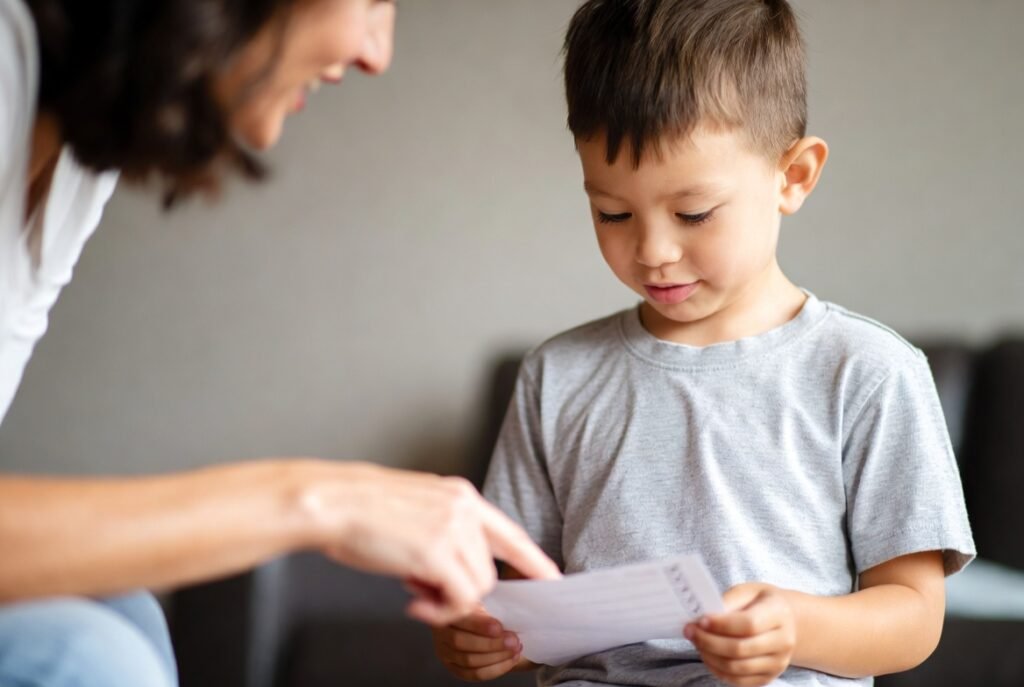
Explain what “done” looks like. Certain guidelines preclude misunderstanding and conflict. When children understand what they are supposed to do then they will tend to perform to their expectations and feel successful afterwards.
Use Visual Charts
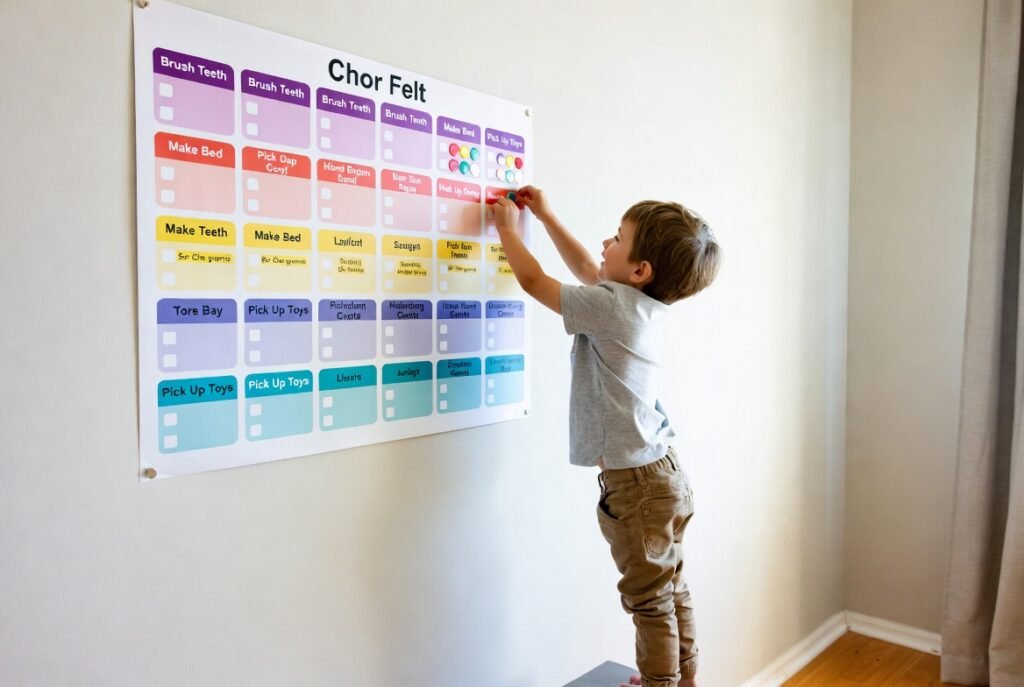
Responsibilities are followed by the help of charts or checklists. The visual reminders help in independence as well as lessening frequent reminders. Checking off activities provides the children with a feeling of accomplishment and development.
Allow Natural Consequences

Failure to do chores should be explained in a calm manner as in less play-time until the chores are done. Children are taught that there are consequences of what they do.
Be Patient With Learning

Children will not initially do their chores well. Errors are involved in learning. Light correction and practice can enable them to develop skills and develop long-term responsibility.
Celebrate Responsibility

Compliment your child when he/she achieves things regularly. Pride and motivation are created through recognition. The sense of trust makes children take responsibility for their future tasks.
